


Merinos Prepares for Initial Public Offering: Over 50 Percent of Shares to Be Allocated to Foreign Investors
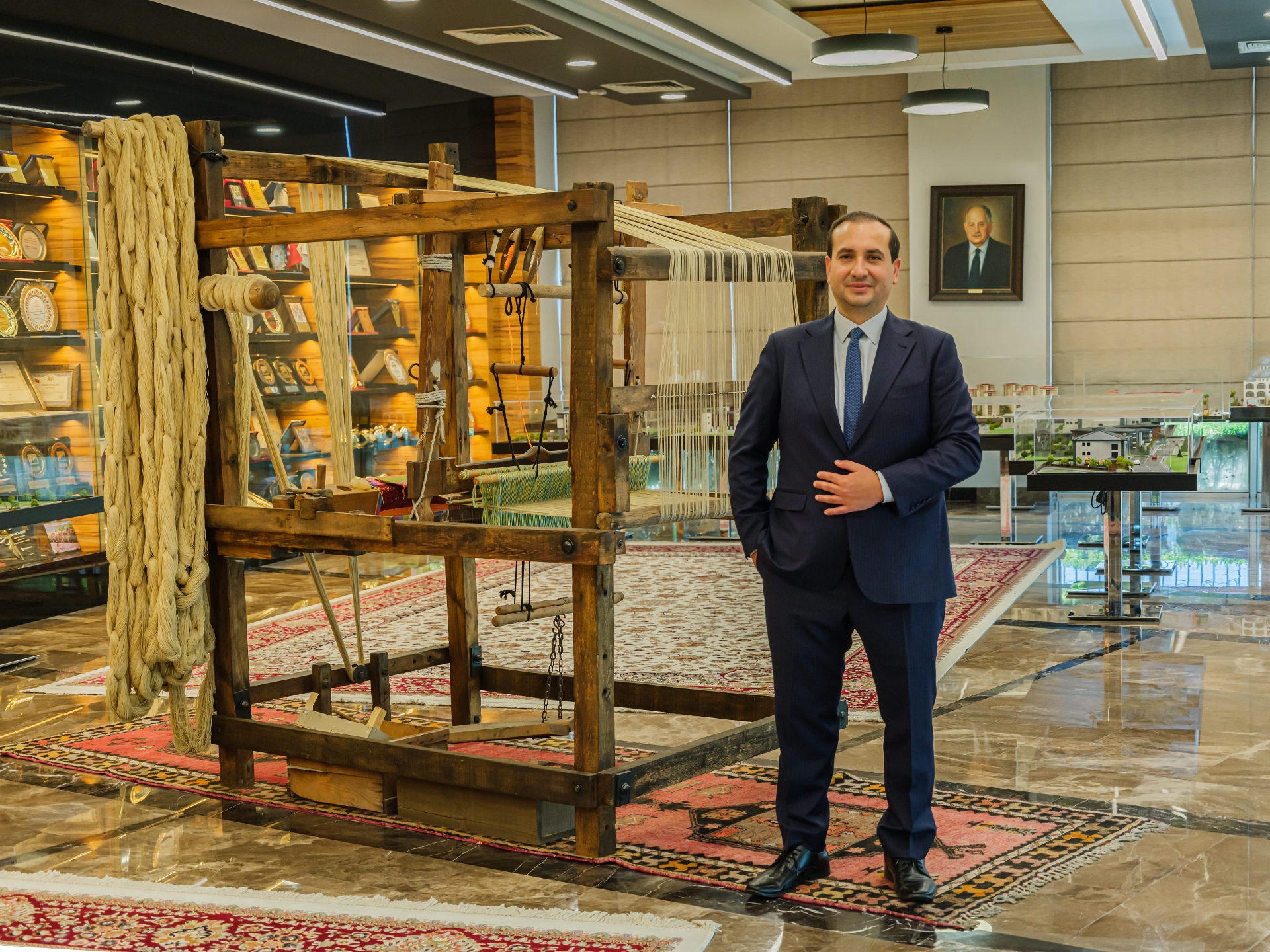
Speaking to reporters at the Merinos facility in Gaziantep, Chairman of the Board of Merinos, Mehmet Erdemoğlu said the initial public offering could be an important test and success story not only for the company but also for Turkey’s capital markets. Erdemoğlu remarked, "We are talking about an international initial public offering on a scale not seen since 2017. It will be a high-value offering."
According to information provided by Merinos management, an application for the initial public offering has not yet been submitted to the Capital Markets Board. Erdemoğlu said, "We are waiting for the most opportune time, we will submit the application for the initial public offering in the not-too-distant future. It will be conducted on Borsa Istanbul, but at least half of it will be allocated to foreign investors."
The target for the initial public offering is between 20% and 30%. As of now, four financial institutions abroad and six within Turkey have been authorized for this transaction.
Noting that the initial public offering should not be viewed solely as Merinos’s offering, given its scale, corporate nature, and the foreign capital it will bring to Turkey, Erdemoğlu stated that more than half of the allocation will go to foreign institutional investors.
Initial public offering proceeds will be reinvested, and SASA’s leverage ratio will decrease
According to information provided by Merinos management, the funds raised from the initial public offering will primarily be used to finance existing investments. The second use of these funds will be to strengthen the capital structure of the group’s companies.
Mehmet Erdemoğlu noted that the proceeds from the initial public offering will contribute to strengthening the Erdemoğlu Group’s financial structure, which will in turn help reduce the leverage ratio of SASA, one of the group’s companies.
Erdemoğlu said they aim to reduce SASA’s leverage ratio to approximately 4 by the end of 2026 and even lower by 2027.
"Merinos is not just a carpet company"
It is noted that the most important message conveyed to foreign investors during Merinos’s initial public offering process is that the company is not merely a carpet manufacturer.
"Merinos is not just a carpet company," said Mehmet Erdemoğlu, explaining that the company started with carpet production but has evolved into a group of companies with an integrated industrial structure spanning from raw materials to chemicals and the final product.
Merinos produces the yarn it uses in its carpets in-house, it also manufactures the dye required for yarn dyeing and performs the dyeing process at its own facilities. The company plans to begin producing polyester chips, one of the raw materials for carpets, as of October 1st.
In this regard, an investment of approximately 270 million dollars has been made in polyester chips. Management emphasizes that end-to-end integration has positively impacted the company’s costs and profitability.
EBITDA margin nearly doubles the industry average
According to figures provided by Merinos management, while the average earnings before interest, taxes, depreciation, and amortization (EBITDA) margin for companies operating in the machine-made carpet sector worldwide stands at 10–12 percent, this ratio is approximately 20 percent at Merinos.
Mehmet Erdemoğlu attributes this difference to the integrated production model and the highly automated production infrastructure.
"We are talking about an extremely modern and computerized production structure," said Erdemoğlu, adding that new business areas could be added to the existing structure in the future.
The valuation will not consider only carpet companies
During the initial public offering process, the company’s valuation is expected to be conducted within a broader framework than simply evaluating Merinos as a traditional carpet manufacturer.
Mehmet Erdemoğlu noted that investment firms initially compared Merinos primarily to carpet and flooring companies, but as discussions progressed, a common understanding emerged that the company’s integrated structure needed to be taken into account.
For this reason, it is expected that valuation comparisons will take into account not only the multiples of carpet and flooring companies but also those of companies in the chemical, petrochemical, and packaging sectors.
SASA’s experience with foreign investors will provide an advantage for Merinos
In Merinos’s initial public offering, the track record of SASA, another publicly traded company within the group, in international capital markets is also viewed as a significant advantage.
İbrahim Erdemoğlu, Chairman of the Board of Directors of Erdemoğlu Holding, noted that SASA has been publicly traded since 1996 and said that the company expanded its international investor base, particularly after joining the Erdemoğlu Group.
Noting that SASA conducts at least three roadshows annually in the U.S., Europe, the U.K., and the Gulf countries, İbrahim Erdemoğlu remarked that these relationships form a crucial foundation for Merinos to reach foreign investors.
"The Core Is Merinos"
İbrahim Erdemoğlu said that Merinos’s strong cash-generating capacity is also one of the key factors that will be highlighted to investors during the initial public offering process.
Noting that Merinos is not merely a manufacturing company but also a strong cash-generating corporation, Erdemoğlu stated that one of the most concrete indicators of this is the fact that the acquisition of SASA was financed by the cash reserves generated by Merinos.
"Today, everyone is looking at SASA, but the core is Merinos," said İbrahim Erdemoğlu, highlighting that the sustainable financial capacity Merinos has built over many years forms the foundation of the group’s current structure.
In this regard, Merinos’s initial public offering will be more than just a single company listing on Borsa Istanbul. The scale of the initial public offering, its focus on foreign institutional investors, and the contribution it will make to financing the Erdemoğlu Group’s existing investments will make this one of closely watched the initial public offerings by Turkey’s capital markets.
Merinos' Growth Formula: A 10-Fold Increase Every 10 Years
Behind Merinos' preparations for the initial public offering lies not only its current financial performance but also a story of steady growth spanning many years.
İbrahim Erdemoğlu, Chairman of the Board of Directors of Erdemoğlu, emphasized that the group's growth is no accident, noting that they have achieved approximately a 10-fold increase in revenue every 10 years since 1983. He explained: "In 1983, our annual revenue was around 250,000 dollars. By 1993, our revenue was 3 million dollars. In 2003, we reached 30 million dollars. In 2013, we hit 300 million dollars in revenue. And by 2023, that figure had risen to 3 billion dollars."
Explaining that the economic challenges following the pandemic and disruptions in the global supply chain had delayed some investments, Erdemoğlu said that, despite this, they had not abandoned their long-term growth strategy.
Delay in SASA Investment Plan
Erdemoğlu noted that SASA’s investment projects have faced a delay of approximately 1,5 to 2 years due to certain technical issues. He explained that one of the large reactors had to be rebuilt after falling into the sea, resulting in a loss of about 1,5 years.
Erdemoğlu said, "Perhaps by 2031, we won’t have grown exactly tenfold again. But I can say that we will be far above today’s level and current market conditions."
The Rule Behind Growth: 90 Percent of Profits Reinvested
In the Erdemoğlu family’s growth strategy, reinvesting a significant portion of the profits back into the company plays a decisive role. İbrahim Erdemoğlu said that the "family constitution" they have been following since 1990 adopts this approach. According to this, "Individuals may spend no more than 10 percent of the companies' total profit. Salaries are included in this. The remaining 90 percent of the profit goes toward reinvestment."
Erdemoğlu emphasized that the total amount all partners can receive cannot exceed 10 percent of the profit, noting that over the years, the funds generated have been directed toward new investments rather than consumption: "Instead of setting aside the money we earned to buy a house, a car, or other such things, we reinvested it in the business. We directed at least 90 percent of the profit toward reinvestment."
They turned crises into opportunities for growth
Merinos management notes that significant uncertainties have emerged in raw material prices and supply chains due to recent regional conflicts and developments in global trade.
İbrahim Erdemoğlu remarked that the company’s integrated production structure provides a significant advantage during this period, noting that they stand out from their competitors in terms of cost, speed, and flexibility, and continued:
"Times of crisis have always presented a growth opportunity for our family-owned companies. We have grown even more during every crisis."
The company notes that, thanks to its own production infrastructure, it is able to reduce the cost and supply risks associated with externally sourced inputs while responding more quickly to changing market conditions.
A 50% Increase in Overseas Orders
Another indicator of Merinos’s strengthened position in global markets is its order volume. Mehmet Erdemoğlu said that when comparing overseas orders from last August with current orders on a per-square-meter basis, there has been an increase of approximately 50%.
Erdemoğlu said, "We are currently hiring new workers. We’re increasing our capacity. We’re also bringing our idle capacity online."
According to Erdemoğlu, reliability, cost, production capacity, and on-time delivery have become more important than ever in customers' choice of suppliers. It is noted that due to these qualities, some customers may have switched from other suppliers to Merinos.
Exports account for 92 percent of revenue
Merinos currently ships the majority of its production to global markets. According to information provided by İbrahim Erdemoğlu, the company generates approximately 92 percent of its revenue from exports and sells to over 100 countries.
With an annual production capacity of 80 million square meters, Merinos accounts for approximately 7 percent of global machine-made carpet production. The company ranks among the suppliers to the world’s largest retail chains, particularly in the U.S. and Europe.
Mehmet Erdemoğlu noted that being a supplier in these markets requires high standards, adding, "It’s not easy to become a supplier to major chains in the U.S. and Europe. Today, Merinos is positioned as a long-term and reliable business partner for these customers."
The Focus for New Growth: the U.S., Europe, and the U.K.
In Merinos’s strategy for the coming period, consolidating its presence in existing global markets will take priority over new capacity investments.
The company aims to grow in the U.S., increase market penetration in Europe, raise its market share in the U.K., strengthen its visibility in the Middle East, and create new opportunities in Africa.
Mehmet Erdemoğlu noted that they do not base their market selection solely on population and market size, but also consider payment systems, business insurance, financial infrastructure, and predictability to be important factors. "For this reason, we prioritize markets with strong financial infrastructure, such as Europe, the UK, and the U.S.," he said.
Artificial Intelligence Is Coming to Carpets
Another pillar of Merinos' growth plan is digitalization and artificial intelligence. The company has launched a strategic partnership with ZEKI (Center for Tangible AI and Digitalization) at the Technical University of Berlin.
The collaboration aims to integrate artificial intelligence into design and production processes. The AI-powered design assistant being developed enables designers to reinterpret existing patterns in seconds and collaborate with customers to develop new designs.
Merinos management views artificial intelligence not as an alternative to human creativity, but as a tool that enhances it. In the long term, the goal is to develop "smart carpets" that combine artificial intelligence with next-generation materials and digital technologies.
This approach stands out as part of a strategy to enhance the company’s future competitiveness by combining over 50 years of production experience with investments in digitalization and artificial intelligence.
Source: CNBC-e
According to information provided by Merinos management, an application for the initial public offering has not yet been submitted to the Capital Markets Board. Erdemoğlu said, "We are waiting for the most opportune time, we will submit the application for the initial public offering in the not-too-distant future. It will be conducted on Borsa Istanbul, but at least half of it will be allocated to foreign investors."
The target for the initial public offering is between 20% and 30%. As of now, four financial institutions abroad and six within Turkey have been authorized for this transaction.
Noting that the initial public offering should not be viewed solely as Merinos’s offering, given its scale, corporate nature, and the foreign capital it will bring to Turkey, Erdemoğlu stated that more than half of the allocation will go to foreign institutional investors.
Initial public offering proceeds will be reinvested, and SASA’s leverage ratio will decrease
According to information provided by Merinos management, the funds raised from the initial public offering will primarily be used to finance existing investments. The second use of these funds will be to strengthen the capital structure of the group’s companies.
Mehmet Erdemoğlu noted that the proceeds from the initial public offering will contribute to strengthening the Erdemoğlu Group’s financial structure, which will in turn help reduce the leverage ratio of SASA, one of the group’s companies.
Erdemoğlu said they aim to reduce SASA’s leverage ratio to approximately 4 by the end of 2026 and even lower by 2027.
"Merinos is not just a carpet company"
It is noted that the most important message conveyed to foreign investors during Merinos’s initial public offering process is that the company is not merely a carpet manufacturer.
"Merinos is not just a carpet company," said Mehmet Erdemoğlu, explaining that the company started with carpet production but has evolved into a group of companies with an integrated industrial structure spanning from raw materials to chemicals and the final product.
Merinos produces the yarn it uses in its carpets in-house, it also manufactures the dye required for yarn dyeing and performs the dyeing process at its own facilities. The company plans to begin producing polyester chips, one of the raw materials for carpets, as of October 1st.
In this regard, an investment of approximately 270 million dollars has been made in polyester chips. Management emphasizes that end-to-end integration has positively impacted the company’s costs and profitability.
EBITDA margin nearly doubles the industry average
According to figures provided by Merinos management, while the average earnings before interest, taxes, depreciation, and amortization (EBITDA) margin for companies operating in the machine-made carpet sector worldwide stands at 10–12 percent, this ratio is approximately 20 percent at Merinos.
Mehmet Erdemoğlu attributes this difference to the integrated production model and the highly automated production infrastructure.
"We are talking about an extremely modern and computerized production structure," said Erdemoğlu, adding that new business areas could be added to the existing structure in the future.
The valuation will not consider only carpet companies
During the initial public offering process, the company’s valuation is expected to be conducted within a broader framework than simply evaluating Merinos as a traditional carpet manufacturer.
Mehmet Erdemoğlu noted that investment firms initially compared Merinos primarily to carpet and flooring companies, but as discussions progressed, a common understanding emerged that the company’s integrated structure needed to be taken into account.
For this reason, it is expected that valuation comparisons will take into account not only the multiples of carpet and flooring companies but also those of companies in the chemical, petrochemical, and packaging sectors.
SASA’s experience with foreign investors will provide an advantage for Merinos
In Merinos’s initial public offering, the track record of SASA, another publicly traded company within the group, in international capital markets is also viewed as a significant advantage.
İbrahim Erdemoğlu, Chairman of the Board of Directors of Erdemoğlu Holding, noted that SASA has been publicly traded since 1996 and said that the company expanded its international investor base, particularly after joining the Erdemoğlu Group.
Noting that SASA conducts at least three roadshows annually in the U.S., Europe, the U.K., and the Gulf countries, İbrahim Erdemoğlu remarked that these relationships form a crucial foundation for Merinos to reach foreign investors.
"The Core Is Merinos"
İbrahim Erdemoğlu said that Merinos’s strong cash-generating capacity is also one of the key factors that will be highlighted to investors during the initial public offering process.
Noting that Merinos is not merely a manufacturing company but also a strong cash-generating corporation, Erdemoğlu stated that one of the most concrete indicators of this is the fact that the acquisition of SASA was financed by the cash reserves generated by Merinos.
"Today, everyone is looking at SASA, but the core is Merinos," said İbrahim Erdemoğlu, highlighting that the sustainable financial capacity Merinos has built over many years forms the foundation of the group’s current structure.
In this regard, Merinos’s initial public offering will be more than just a single company listing on Borsa Istanbul. The scale of the initial public offering, its focus on foreign institutional investors, and the contribution it will make to financing the Erdemoğlu Group’s existing investments will make this one of closely watched the initial public offerings by Turkey’s capital markets.
Merinos' Growth Formula: A 10-Fold Increase Every 10 Years
Behind Merinos' preparations for the initial public offering lies not only its current financial performance but also a story of steady growth spanning many years.
İbrahim Erdemoğlu, Chairman of the Board of Directors of Erdemoğlu, emphasized that the group's growth is no accident, noting that they have achieved approximately a 10-fold increase in revenue every 10 years since 1983. He explained: "In 1983, our annual revenue was around 250,000 dollars. By 1993, our revenue was 3 million dollars. In 2003, we reached 30 million dollars. In 2013, we hit 300 million dollars in revenue. And by 2023, that figure had risen to 3 billion dollars."
Explaining that the economic challenges following the pandemic and disruptions in the global supply chain had delayed some investments, Erdemoğlu said that, despite this, they had not abandoned their long-term growth strategy.
Delay in SASA Investment Plan
Erdemoğlu noted that SASA’s investment projects have faced a delay of approximately 1,5 to 2 years due to certain technical issues. He explained that one of the large reactors had to be rebuilt after falling into the sea, resulting in a loss of about 1,5 years.
Erdemoğlu said, "Perhaps by 2031, we won’t have grown exactly tenfold again. But I can say that we will be far above today’s level and current market conditions."
The Rule Behind Growth: 90 Percent of Profits Reinvested
In the Erdemoğlu family’s growth strategy, reinvesting a significant portion of the profits back into the company plays a decisive role. İbrahim Erdemoğlu said that the "family constitution" they have been following since 1990 adopts this approach. According to this, "Individuals may spend no more than 10 percent of the companies' total profit. Salaries are included in this. The remaining 90 percent of the profit goes toward reinvestment."
Erdemoğlu emphasized that the total amount all partners can receive cannot exceed 10 percent of the profit, noting that over the years, the funds generated have been directed toward new investments rather than consumption: "Instead of setting aside the money we earned to buy a house, a car, or other such things, we reinvested it in the business. We directed at least 90 percent of the profit toward reinvestment."
They turned crises into opportunities for growth
Merinos management notes that significant uncertainties have emerged in raw material prices and supply chains due to recent regional conflicts and developments in global trade.
İbrahim Erdemoğlu remarked that the company’s integrated production structure provides a significant advantage during this period, noting that they stand out from their competitors in terms of cost, speed, and flexibility, and continued:
"Times of crisis have always presented a growth opportunity for our family-owned companies. We have grown even more during every crisis."
The company notes that, thanks to its own production infrastructure, it is able to reduce the cost and supply risks associated with externally sourced inputs while responding more quickly to changing market conditions.
A 50% Increase in Overseas Orders
Another indicator of Merinos’s strengthened position in global markets is its order volume. Mehmet Erdemoğlu said that when comparing overseas orders from last August with current orders on a per-square-meter basis, there has been an increase of approximately 50%.
Erdemoğlu said, "We are currently hiring new workers. We’re increasing our capacity. We’re also bringing our idle capacity online."
According to Erdemoğlu, reliability, cost, production capacity, and on-time delivery have become more important than ever in customers' choice of suppliers. It is noted that due to these qualities, some customers may have switched from other suppliers to Merinos.
Exports account for 92 percent of revenue
Merinos currently ships the majority of its production to global markets. According to information provided by İbrahim Erdemoğlu, the company generates approximately 92 percent of its revenue from exports and sells to over 100 countries.
With an annual production capacity of 80 million square meters, Merinos accounts for approximately 7 percent of global machine-made carpet production. The company ranks among the suppliers to the world’s largest retail chains, particularly in the U.S. and Europe.
Mehmet Erdemoğlu noted that being a supplier in these markets requires high standards, adding, "It’s not easy to become a supplier to major chains in the U.S. and Europe. Today, Merinos is positioned as a long-term and reliable business partner for these customers."
The Focus for New Growth: the U.S., Europe, and the U.K.
In Merinos’s strategy for the coming period, consolidating its presence in existing global markets will take priority over new capacity investments.
The company aims to grow in the U.S., increase market penetration in Europe, raise its market share in the U.K., strengthen its visibility in the Middle East, and create new opportunities in Africa.
Mehmet Erdemoğlu noted that they do not base their market selection solely on population and market size, but also consider payment systems, business insurance, financial infrastructure, and predictability to be important factors. "For this reason, we prioritize markets with strong financial infrastructure, such as Europe, the UK, and the U.S.," he said.
Artificial Intelligence Is Coming to Carpets
Another pillar of Merinos' growth plan is digitalization and artificial intelligence. The company has launched a strategic partnership with ZEKI (Center for Tangible AI and Digitalization) at the Technical University of Berlin.
The collaboration aims to integrate artificial intelligence into design and production processes. The AI-powered design assistant being developed enables designers to reinterpret existing patterns in seconds and collaborate with customers to develop new designs.
Merinos management views artificial intelligence not as an alternative to human creativity, but as a tool that enhances it. In the long term, the goal is to develop "smart carpets" that combine artificial intelligence with next-generation materials and digital technologies.
This approach stands out as part of a strategy to enhance the company’s future competitiveness by combining over 50 years of production experience with investments in digitalization and artificial intelligence.
Source: CNBC-e